

Structure
4 - Writing concisely
Structure
Mastering structure is the key to excellent copywriting. Mostly, our briefs prescribe the structure, by suggesting various subheadings and H2s/H3s. Structure, however, is about more than that.
Here are our key tips for successfully structuring an article:
- Strong introduction
- Effective paragraphs
- Stick to the outline
- Prioritise readability
- The inverted pyramid
- Storytelling
1. Strong introduction
When it comes to writing a concise introduction, focus on being captivating above all else. Here are some tips to help you engage the reader from the off.
- Ask a question: a classic tactic is to start your post with a rhetorical question that you know the reader will answer yes to. For example "Finding the right travel agency for corporate journeys can be a headache, can't it?" or "Want to know how to create a successful content marketing strategy?"
- Include a persuasive statistic: an interesting fact or stat that supports your argument can be crucial to convincing the reader that whatever the pinpoint is, it's a) a common problem and b) easily solved with the client's product. Make 100% sure your stats are relevant and reliable.
- Use a metaphor, simile, or analogy: figurative writing is fun for us as writers and engaging for readers. For example "boosting organic traffic with limited knowledge of SEO is like trying to get to the moon on a moped. It's not happening."
2. Effective paragraphs
Splicing up your writing with strong, logical paragraphs is a key skill you'll develop over time. As a general rule, keep paragraphs to 3-5 lines long for most clients.
When structuring a paragraph, you need:
- A strong topic sentence that introduces the main idea
- Supporting sentences to back up your point
- A closing phrase to round off your paragraph
Signs to move onto a new paragraph:
- Contrasting information or ideas
- Moving onto a new point within the same topic
- If you're describing complex information, giving your readers a pause can help make your content more digestible.
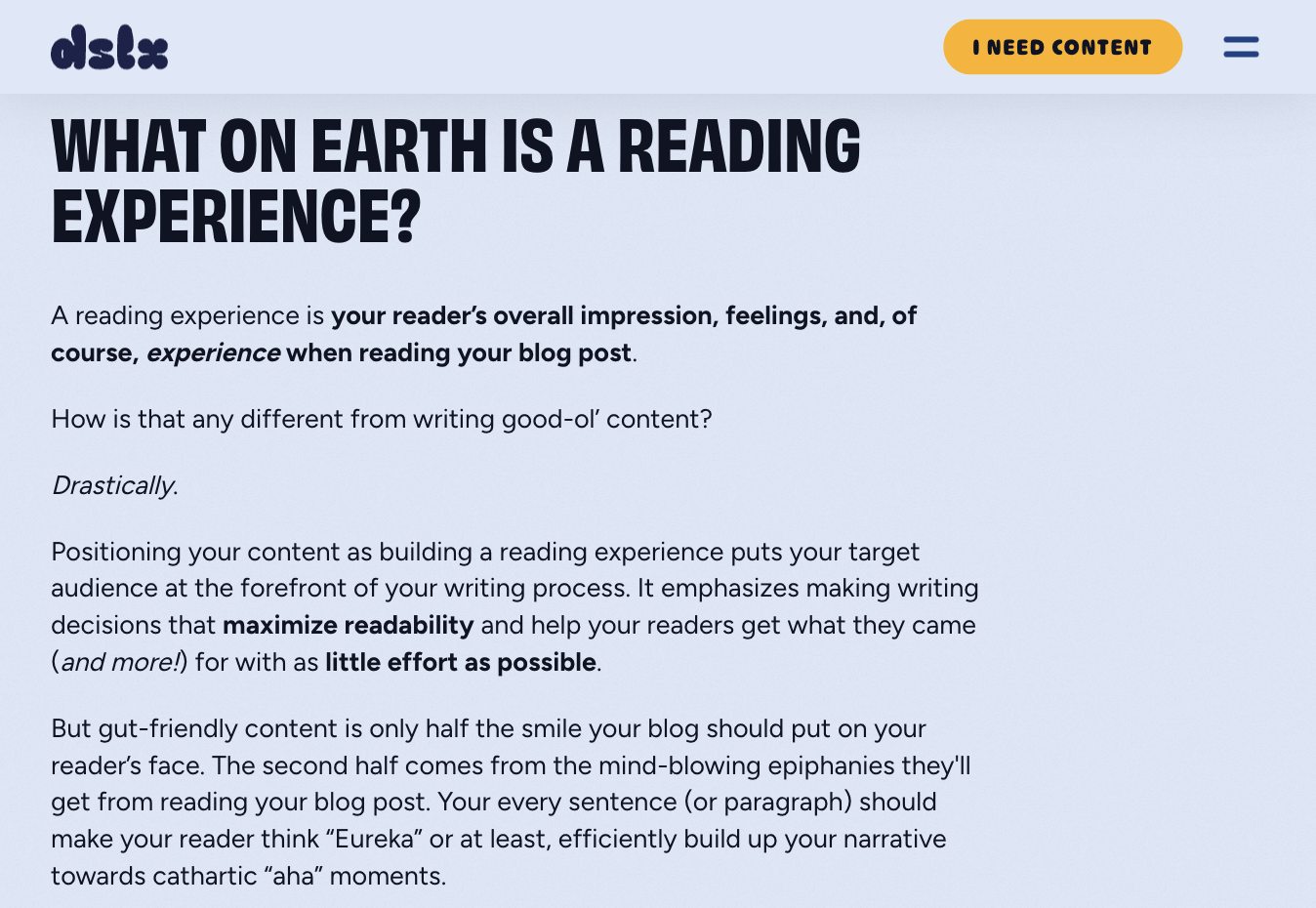
Here's a masterclass from Armin in the art of paragraphing, used in an article for dslx. Note his use of short, sharp single sentence paragraphs to break up important information and draw the reader's attention.
3. Stick to the outline
When writing, it's essential to keep to the structure outlined by the client. Stick to it, and kick off each paragraph with a strong opening line, a preview of what's ahead. Then, delve into the details within the rest of the paragraph.
Here's an example of a suggested structure from a Sona brief:
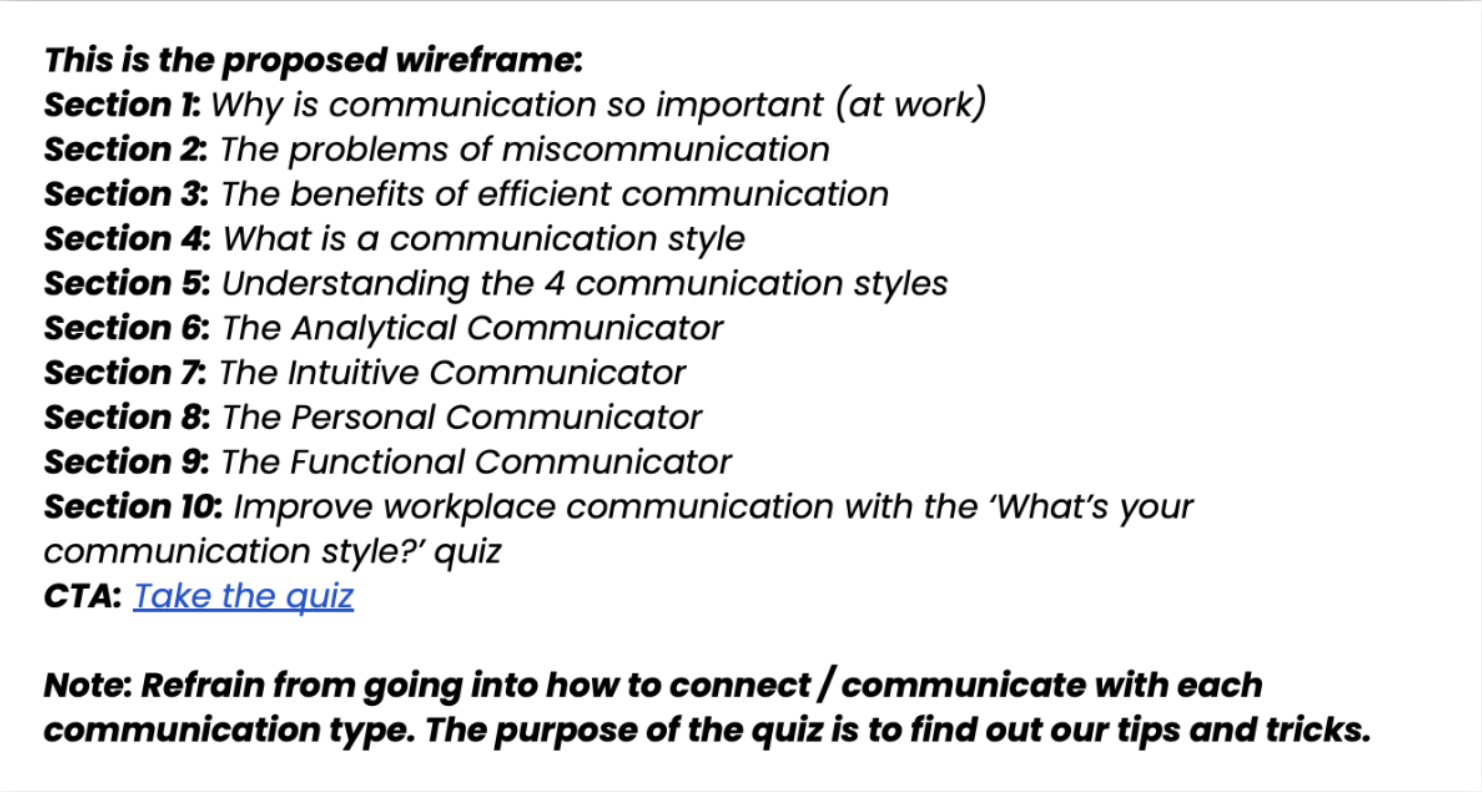
This proposal doesn't include H2 or H3s, so it's up to us to work out a structure that will be both readable and informative.
Some clients provide more detailed briefs than others; as long as you're using everything that's specified on the article outline and creating a logical structure, you'll be fine.
4. Prioritize readability
Given the challenges of screen-based reading, you need to be optimizing your blog post to make it as easy as possible to read.
Content that's easy on the eyes not only keeps visitors coming back but also heightens your chances of making a connection. Keep in mind that it's not just about the words you choose – it's about tailoring those words to your specific audience.
💡 Remember what Ray said about incorporating UX principles into our writing? Revisit his video and article for a refresher.
5. Consider the inverted pyramid
Have you come across the concept of the inverted pyramid technique? It's like putting the icing on the cake first – or leading with the most compelling information. There's no reason to bury the treasure in the depths of your article.
Instead, present the core message upfront. Many of our readers are looking for quick answers, and to keep them coming back for more we have to provide them with information of value asap.
6. Storytelling
As you might be able to tell by now, harnessing the art of storytelling and converting it into compelling copy is one of our strengths at dslx.
It's one of the most powerful tools you can use in copywriting and marketing, by using stories to build an emotional connection with the target audience.
Rewatch Ray's video for a reminder of the role played by storytelling in copywriting.