

Writing for accessibility and inclusivity (A&I)
3 - Writing correctly
Writing correctly
As content and copywriters, it's not just about what we write, but how we write it.
We’ll look at everything about how to write correctly, whether that's making sure your writing is inclusive, or simply giving credit where it's due.
Accessibility & Inclusivity
Accessibility is much more than a nice-to-have, it's a must-have. Accessible, inclusive writing goes right to the very core of the dslx mission.
📒 Contents:
- Accessible language
- Inclusive language
- Alt text
- Emojis
1. Accessible language
Let's start with language. It might seem obvious, but accessible language means language that people can read. Our goal is to produce text that is easy to understand, and which provides value to its reader.
Creating accessible language can be boiled down to three C's:
- Consistent
- Clear
- Concise
What does this mean in practice?
Well, being consistent involves using the same terms, acronyms, and references throughout your article. Define any jargon-y words at the start of your article, and stay consistent throughout.
For example, you might include the phrase "search engine optimization (SEO)" in your intro. Now that you've specified, you can stick to using the acronym SEO throughout.
Writing clearly speaks for itself. Never assume your reader knows the meaning of every term you're using. At the same time, you don't want to be patronizing, so make sure you're clear on the target audience you're writing for, and ask yourself the following questions:
- Who is reading this piece?
- Why are they reading it?
- What position in their company might they be?
- What do they know?
Making sure your copy is clear and concise is a given, but as a general rule:
- Use the active voice
- Keep your sentences short
- Replace jargon with simple alternatives
- Put your main points higher on the page
Remember, most readers will be scanning the webpage, rather than reading every word. Our form and structure need to be as readable as possible, allowing users to gain as much information as possible in a short amount of time.
A. The importance of page structure
When we talk about page structure, we're referring to the way headers, paragraphs, and links are arranged on the page. Each paragraph should be concise, with around 3-5 lines of text.
Headings should be clear, to-the-point, and engaging. Familiarize yourself with the Google Docs styler to gain a concrete understanding of which size to use and when.
B. Make it skimmable
Only 16% of users read webpages word-for-word. Making an article readable is almost as important as writing the content itself.
2. Inclusive language
At dslx, for example, we always use language that embraces diversity, respects all gender identities, and ensures that every culture feels both included and represented.
Inclusive language avoids making assumptions about the audience, and doesn't leave anyone out. It is empathetic and considerate.
It might sound obvious, but actually using language or phrases that exclude people is extremely easy. Writing inclusively requires an active effort on our part, evaluating terms we use on a daily basis to ensure they fit with our mission.
Here are three tips to bear in mind to write inclusively:
1. Avoid ableist language
Any term used to describe a physical disability or mental health issue is a form of ableism. Again, it sounds simple, but actually, we use excluding language far more than we realize.
💡 For example, try to avoid terms such as 'crazy', 'bonkers', or 'insane'.
It's a learning curve, and it takes time to get used to. Increased awareness is the key: the rest will follow.
2. Avoid gendered terms
Oversimplistic, binary words are all around us. Any time you're writing about gender, try to consider people who don't fit into the gender binary. In practice, this means prioritizing 'they' instead of 'he/she' and 'person' over 'man/woman'.
We also encourage our writers to avoid gendered pronouns, of which there are a lot more than we realize! We might use words such as 'king' or 'wife' all the time, but all it takes is increased awareness.
3. Use person-first language when appropriate
Person-first language involves emphasizing the person before the descriptor. For example, rather than referring to someone as a 'female director', you'd say 'director'. Most of the time, however, you don't even need the descriptor. Only include it if it's relevant, for example, to a quote you've included.
Our understanding of inclusive language is changing all the time, and we gain a much stronger awareness with practice, so don't worry if it takes a while for you to implement these tips. Everyone makes mistakes, but awareness is the first, key step.
4. Reconsider war-related language
This is a habit many of us are trying to shake. But, it's time for change.
Where possible try to avoid war analogies to make your point. For example, they are a ninja, or a warrior. Or calling a marketing scene your battleground.
5. Be cautious about religious connotations
This happens more often than you'd think. SaaS tools taking you to heaven or being referred to as Angels or Blessings. At the same time, many brands default to communicating on specific holidays: e.g. Merry Christmas, but fail to register other religious holidays. To be safe, it's best to avoid special-mentioning them altogether.
3. Alt text
At dslx, we aim to consistently include readers with disabilities who might use a screen reader or navigate exclusively with a keyboard.
1. Be thoughtful about alt text
One of the best ways to include all readers is by providing great alt text on all the images.
Alt text is an alternative to seeing the image directly, by providing a brief description of what is shown in the picture.
Both screen readers and search engines need alt text to understand what the image is, so it's important to add keyword-rich alt text. Alt text is the most basic form of image description, and should be included on all images you use.
Alt text should be around 140 characters, including a brief description of the image or graph. If it's a graph, you should include all the important data in the alt text so that people who can't see the image come away with exactly the same information. If it's a creative image or photograph, describe the image in brief.
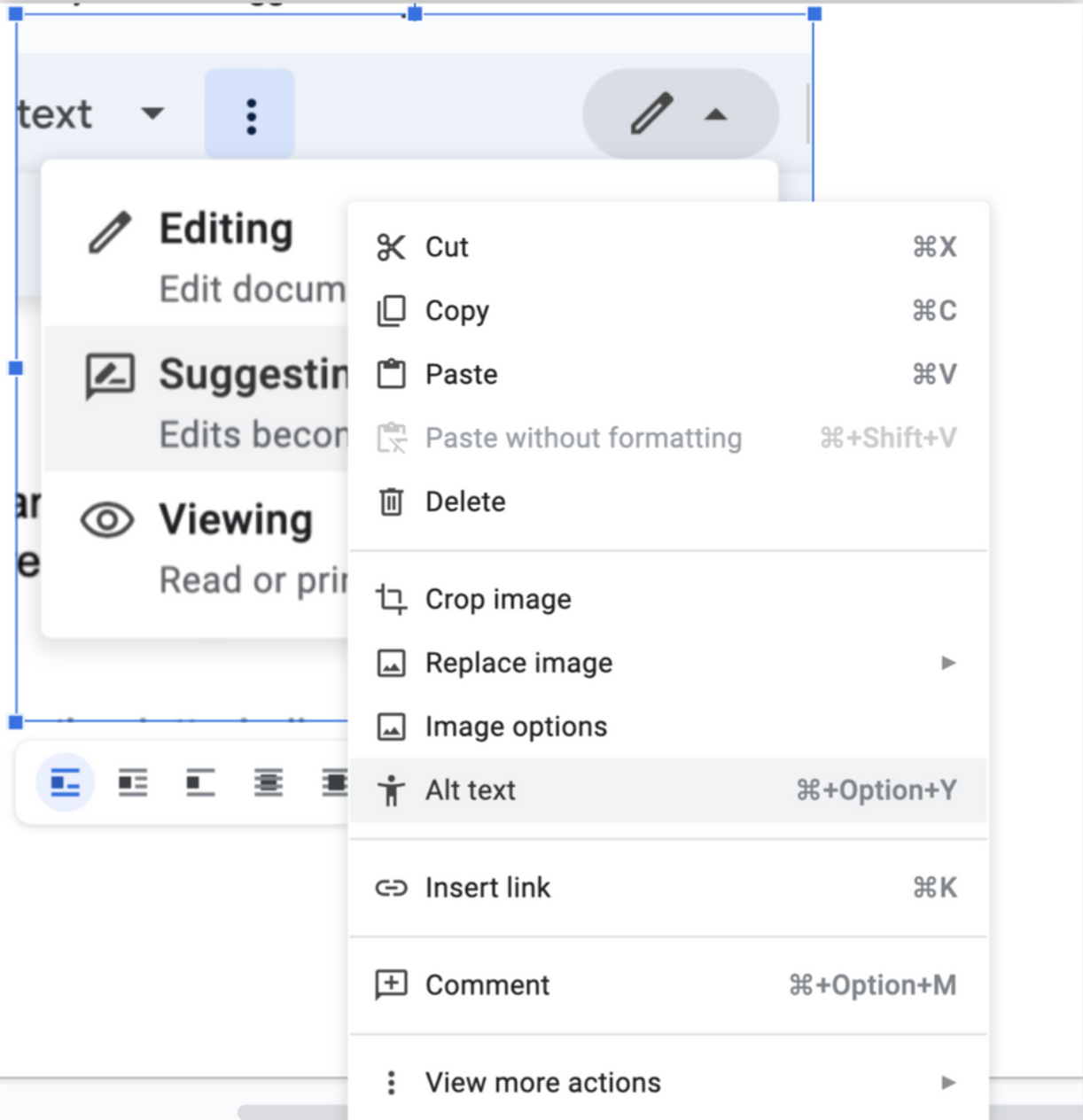
For more SEO points, try and include keywords where possible, but remember the golden rule—prioritize writing naturally over shoehorning in keywords.
Here are some points to consider:
- What is this image supposed to communicate?
- These alt tags need to be relevant to users, so prioritize clear descriptions over inserting as many keywords as possible.
- Avoid describing the gender, age, or race of people in images, unless it's specific to the content being understood.
- Avoid using "image of" or similar. It's already implied that there's an image there.
💡 Remember to compress your images, which you can do using websites such as tinypng.com.
4. Emojis
Emojis! Today many websites and brands love using emojis. After all, they're a fun way to spice up a word-heavy article—if it suits the tone and style of the piece. Here are a few things to keep in mind when using emojis:
1. Skin tone
Any emojis showing human features with skin tone should always be used in the neutral form (bright yellow). This doesn't change, no matter who is using them, or who they are directed at.
2. Spacing
No 👏 content 👏 like 👏 this 👏 .
Many screen-readers have a difficult time processing symbols between words. To someone with a screen-reader, this sentence would be translated as: 'No clap content clap like clap this clap please clap.'
3. Frequency
Use emojis sparingly. While social media posts can get away with more emojis, in our blog articles we keep it to about 3-5. The words come first: emojis are there to enhance the points we make.
4. Placement
Just like the above example demonstrates how emojis can disrupt your text, poor placement can also wreak havoc with screen-readers. Here are three top tips to bear in mind.
- Don't use emojis to replace words
❌ Check your 📥 for more information
✅ Check your inbox for more information - No emojis in the middle of sentences
❌ When creating whitepapers📄, write clearly and concisely throughout
✅ When creating whitepapers, write clearly and concisely throughout 📄 - Avoid repeated emojis
❌ We're delighted to introduce our newest client 🎉🎉🎉🎉🎉🎉
✅ We're delighted to introduce our newest client 🎉