You know those moments when you see a brand doing something cool. Something funny. Something that makes you want to send it to a friend.
That’s when you might get this sticky thought: Hey, should we also spice up our brand voice?
But then comes the practical part. How do you do that?
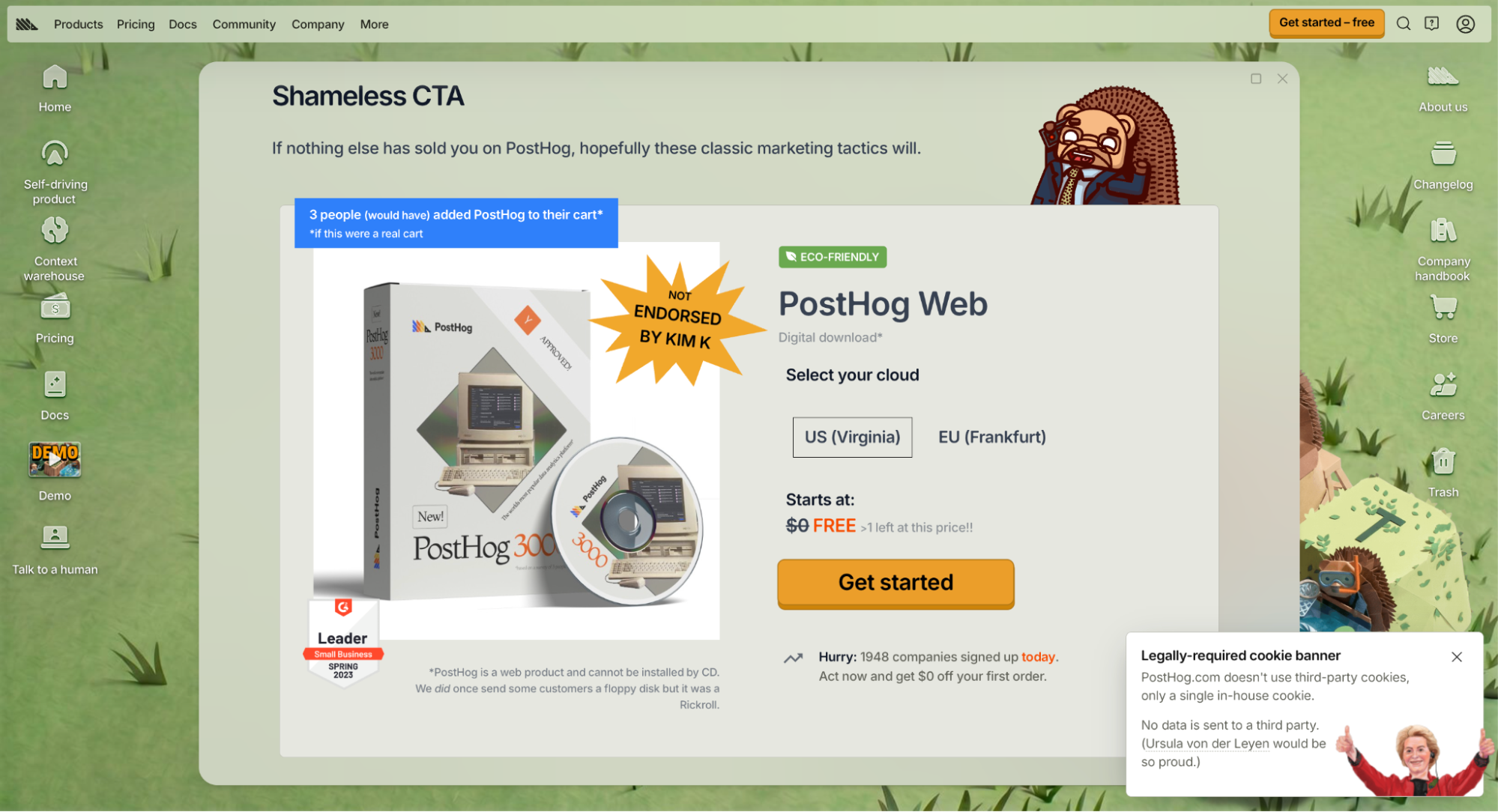
Should you also be fun and geeky like PostHog?
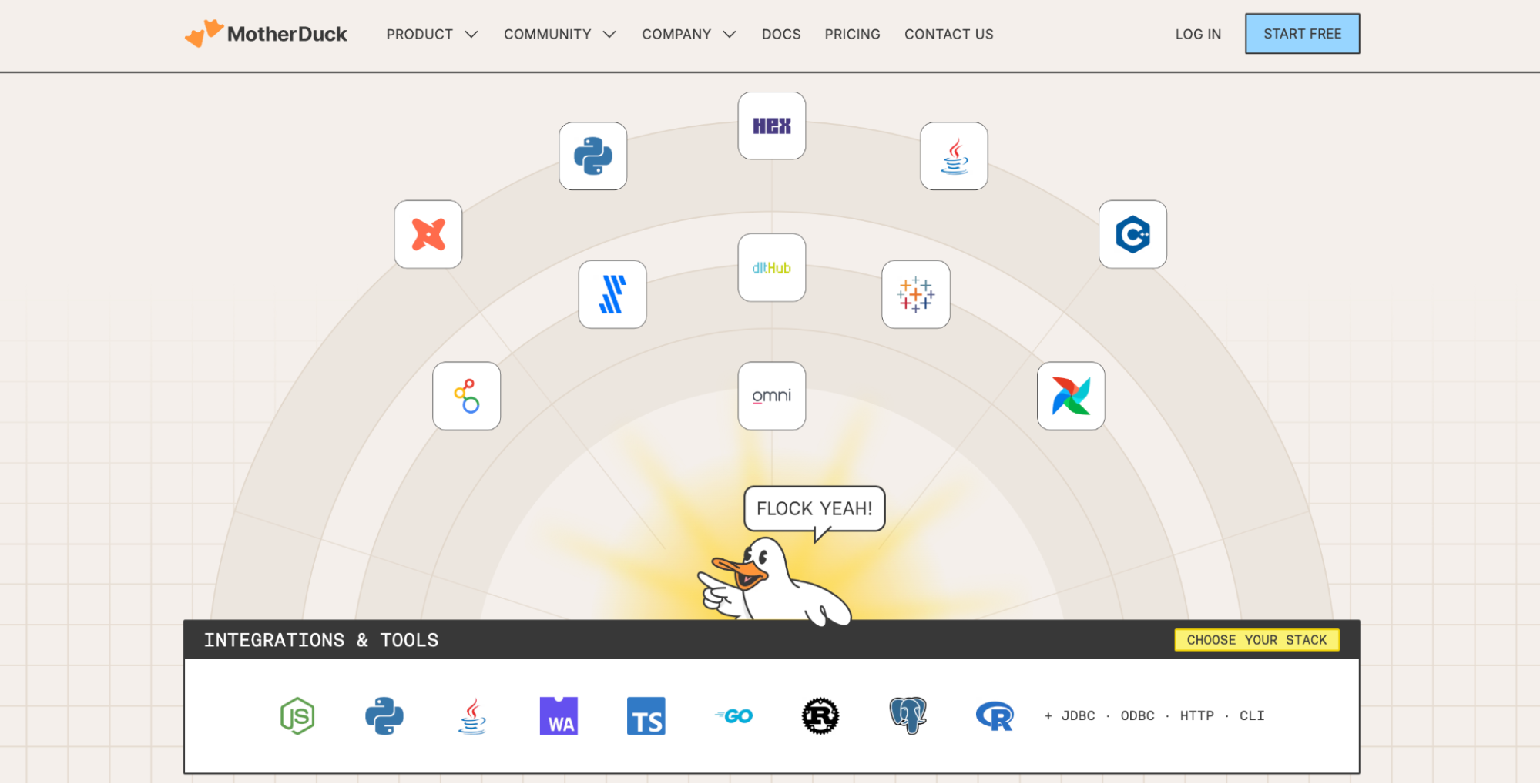
Or maybe you should add a slightly sweary mascot like MotherDuck?
Or, if you’re feeling particularly adventurous, should you get your HR team to bring in a python and put on a performance as ClickUp did?
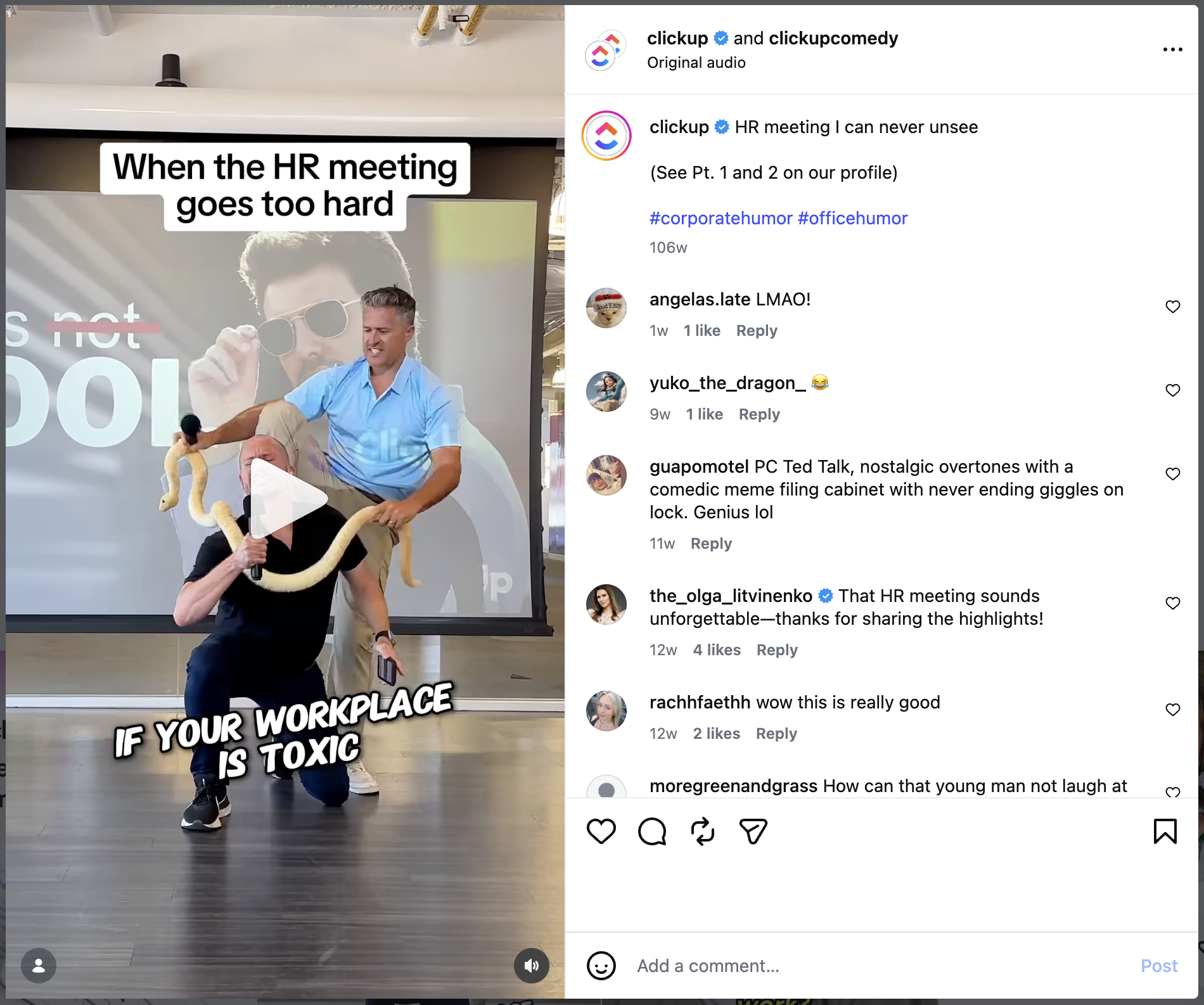
Source: Instagram
If you were to ask us, we’d say: “None of those.”
Those businesses did a great job. But what does their brand messaging have to do with your company?
In this brand voice guide, we’ll try to resolve most of your doubts and help you understand how to find your true ToV, one that just feels right. And of course, we’ll look at why most of those “cool” examples aren’t that useful and offer you the ones that can help.
The problem with most brand voice advice
There are so many Venn diagrams online that try to explain what brand voice is and how to find yours.
You’ll see blog posts saying:
- Your voice has to be “authentic, differentiated, appropriate, and readable.”
- Or that it should be based on “personality, tone, rhythm, and vocabulary.”
But what does that actually mean?
The issue is that all this advice makes us focus on theoretical details that are destined to spend the rest of their lives in yet another useless PowerPoint.
Brand voice isn’t meant to stay theoretical. It has to be actively used by your whole team, from marketers and PR specialists to customer support and product managers. It’s a foundational element of your entire online presence management and brand visibility.
That’s why any advice you use to find your ToV has to be practical. And easy for everyone on your team to apply.
Why you (likely) don’t need to be the next PostHog or Duolingo
Whether you look at B2B or B2C brand voice examples, there are plenty of interesting cases. But often, we pay most attention to the “extreme” ones, whether it’s Ramp’s viral The Office-inspired TikTok:
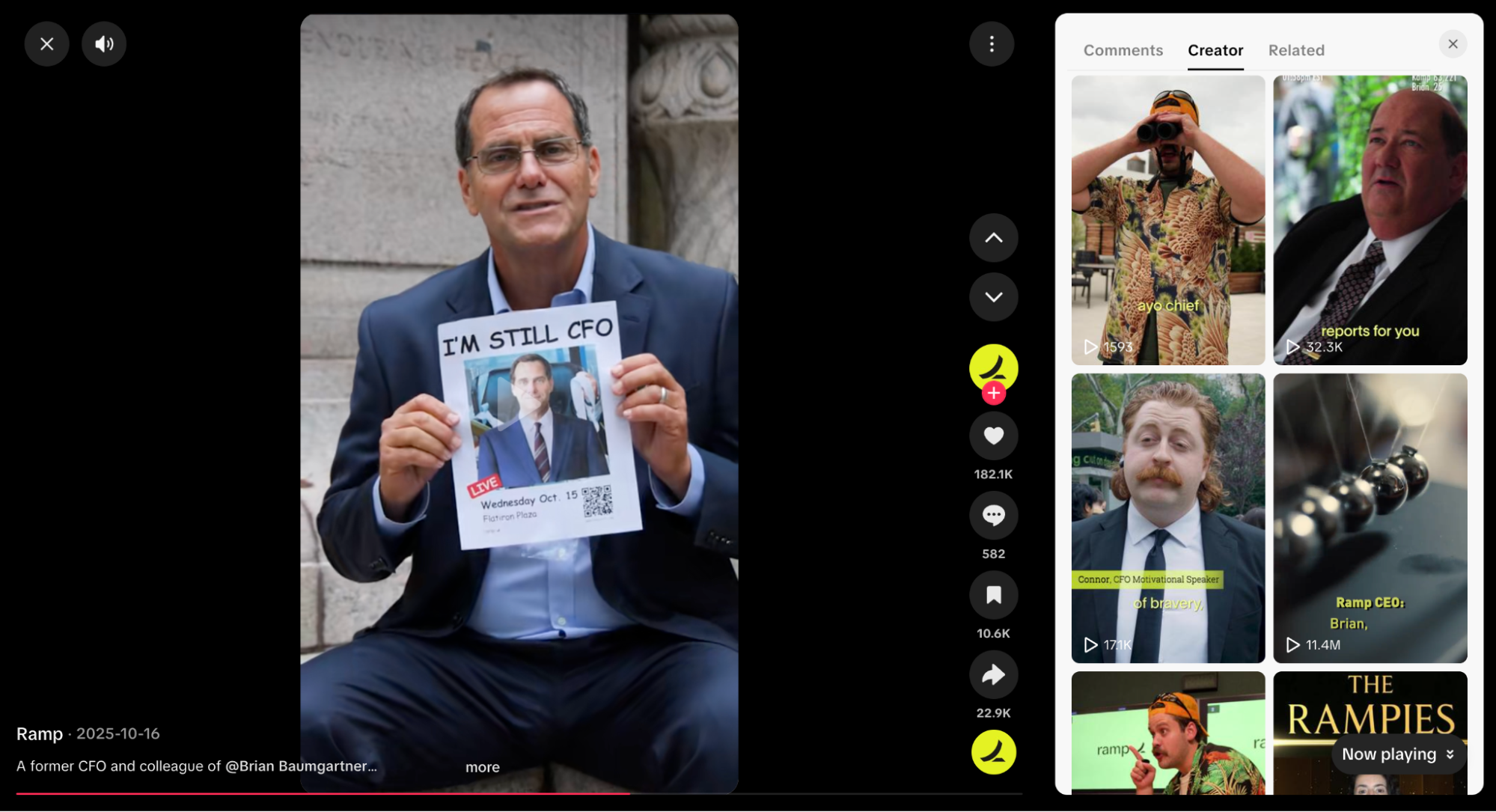
Source: TikTok
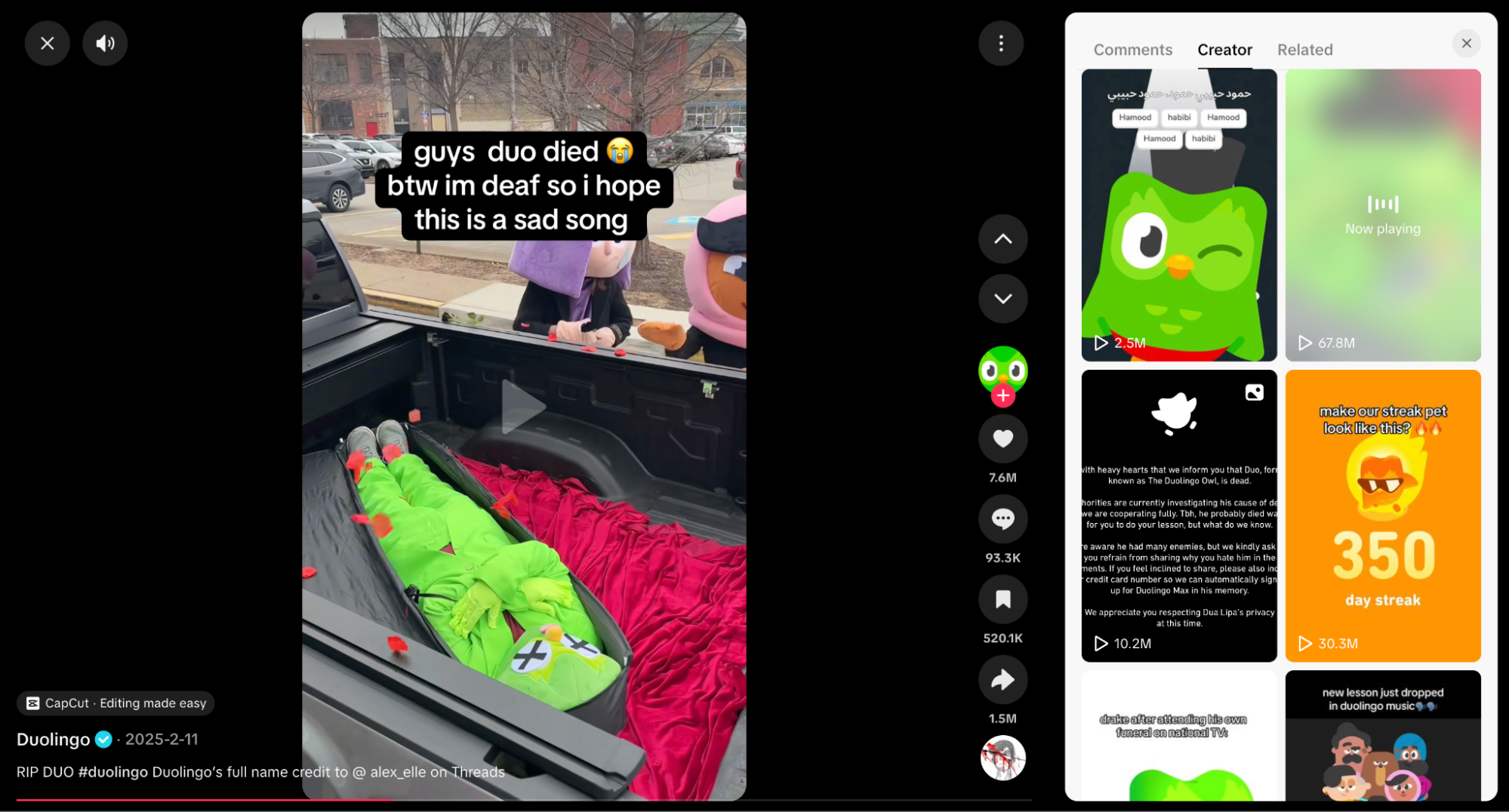
Or Duolingo’s mascot funeral:
Source: TikTok
They’re funny and very different from what’s already out there.
But the thing with all those cool examples is that once we see something fresh, we often think that it’s exactly what we need.
That’s human nature. And it’s backed by tons of research:
- Research using eye tracking found that we look toward things we haven’t seen before.
- People are more likely to explore novel options, even when those options aren’t objectively more rewarding.
- We remember something unusual or different better than everything around it (known as the von Restorff effect).
So, it’s completely natural to be drawn to new things. And it’s only logical that you want your brand to feel fresh.
Yet, you know how it is. Whenever a brand tries to replicate someone else’s style, it just looks weird. And really off. Besides, people tend to trust businesses less when their content is inconsistent with their image.
That’s why you don’t need to look for the next TV show you can recreate or create a mascot and bury it. Those things work for other brands because they feel like them. They fit their style.
It doesn’t mean that you can’t play around, be witty, experiment, follow your curiosity, or look for interesting angles. You can do all that. But one content experiment can’t define your entire brand messaging. Because your brand voice is much bigger than one post.
And above all, it has to feel right.
Not cool. Not fun. Not “hmm, sounds interesting.”
It has to feel like it’s your company with your team behind it.
You might need a new format, not a new brand voice
Sometimes, teams think they want a new ToV.
But in reality, they simply want to add something fresh.
If that’s the case, you don’t have to change your entire brand communication or rewrite everything across channels. If all you want is to add more fun to your content strategy, simply think of some new formats.
For example, Domo has a pretty basic, serious ToV. But they still publish blog posts like this, and it works great for them:

How to find your brand voice
We won’t give you yet another theoretical approach. Instead, we suggest five practical steps that can help you understand the environment you’re in. And ultimately, figure out how you want to show up in that environment.
1. Understand what you and your team want
When marketers want to define their brand, they mostly turn to competitor analyses (57%) and customer research (49%).
And that’s the right thing to do. Competitors shape the market, and customers shape your products and services. But you know who else influences your offering?
Those sleepy people you see on early Zoom calls and occasionally talk to at team-building events. Your team’s “vibe” is essentially what stands behind your product or service.
So, before you choose any brand voice, look realistically at those around you and pay attention to their personalities. Not every team or business needs to be sassy or quirky. If you have a classy company with a team that has traditional values, creating a rebellious ToV is pointless.
While this sounds obvious, companies sometimes forget that when they “want to be fun,” it may not represent them at all.
2. Research what your audience likes
Next, of course, comes the audience.
One of the best ways to understand what your target users want is by checking Reddit, especially for SaaS.
Here’s how I like to do it:
- Find relevant subreddits in your niche.
- Look for the top posters and commenters (you’ll often see badges next to their names).

- You can also check out moderator profiles (usually, they’re very much into the topic too).
- Go to their profiles and read their comments, posts, and replies.
This gives you a realistic foundation instead of relying on guesses your team might have.
There are other ways to do audience research, for sure. But I love Reddit for its honesty. It’s easy to understand what people are tired of, what gives them the ick, and what they really, really, really want.

Source: Giphy
3. List what people expect of your product/service
Being creative is great. But every industry has certain “boundaries.” So, it’s really helpful to list the non-negotiables your brand messaging has to align with.
If you’ve noticed, there is one pattern we’re keeping throughout this guide: your brand voice has to be sustainable.
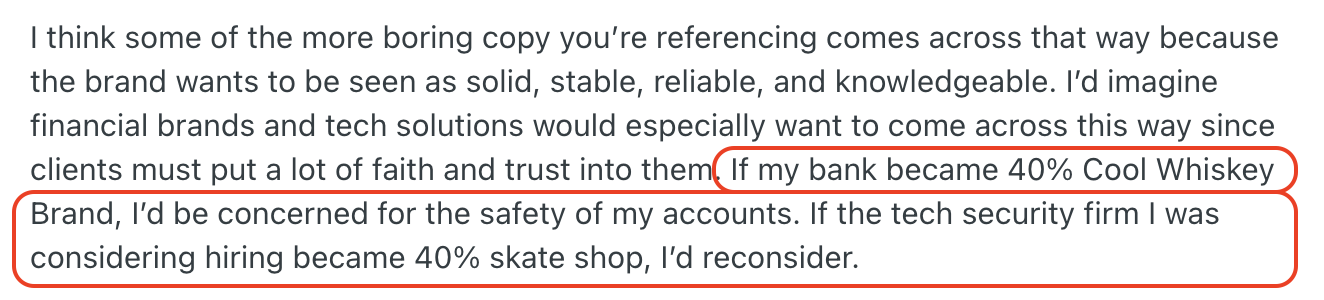
So, before you make any changes, think of the expectations people have in your niche. “Breaking” some of those can feel fresh and make people pay attention to your company. But if you ignore the others, your audience might feel unsafe or uncomfortable.
Here is a great example of how it isn’t the same for every business and niche:
Source: Reddit
So yes, sometimes, basic trustworthiness is more important than sending a funny email to your customers. Because your voice has to strengthen your digital authority and credibility, instead of damaging them.
4. Analyze other brands in your niche
Analyze your competition to understand what not to do.
Sometimes, other brands in your niche can serve as inspiration. But we encourage you to look at your competitors in the bigger picture. The point is to analyze what everyone else is doing and understand how you can be different.
Yet again, it doesn’t always mean that you have to get eccentric and do some pretty weird stuff on socials.
Sometimes, the best thing you can do for your ToV is to just keep it simple.
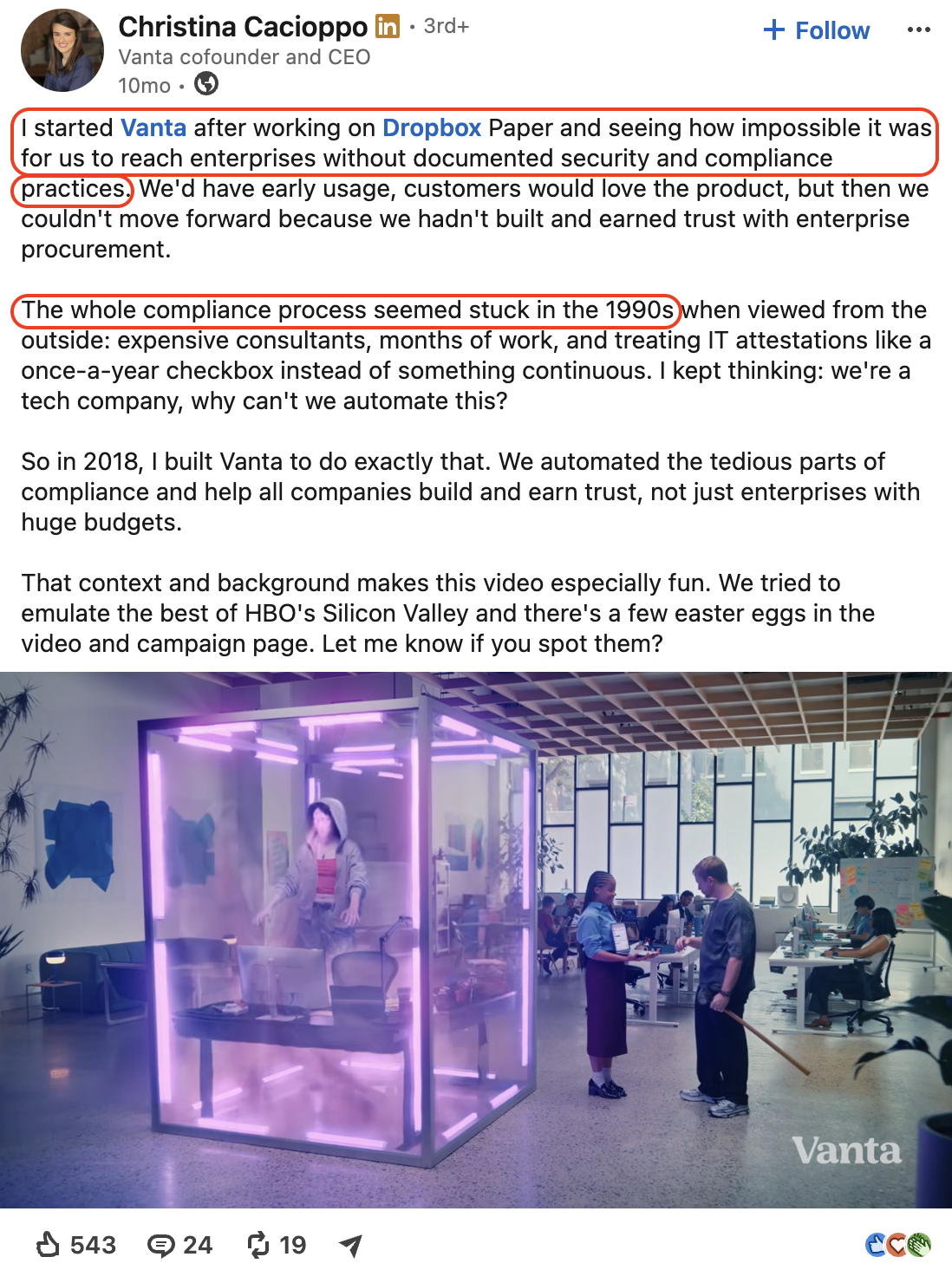
This is exactly the approach Vanta chose. Their founder has mentioned multiple times that she started the business because compliance seemed so complicated and outdated.
Source: LinkedIn
So, one of the initial goals of the company was to automate compliance and make it easier. And the straightforward ToV they chose fits their brand essence perfectly.
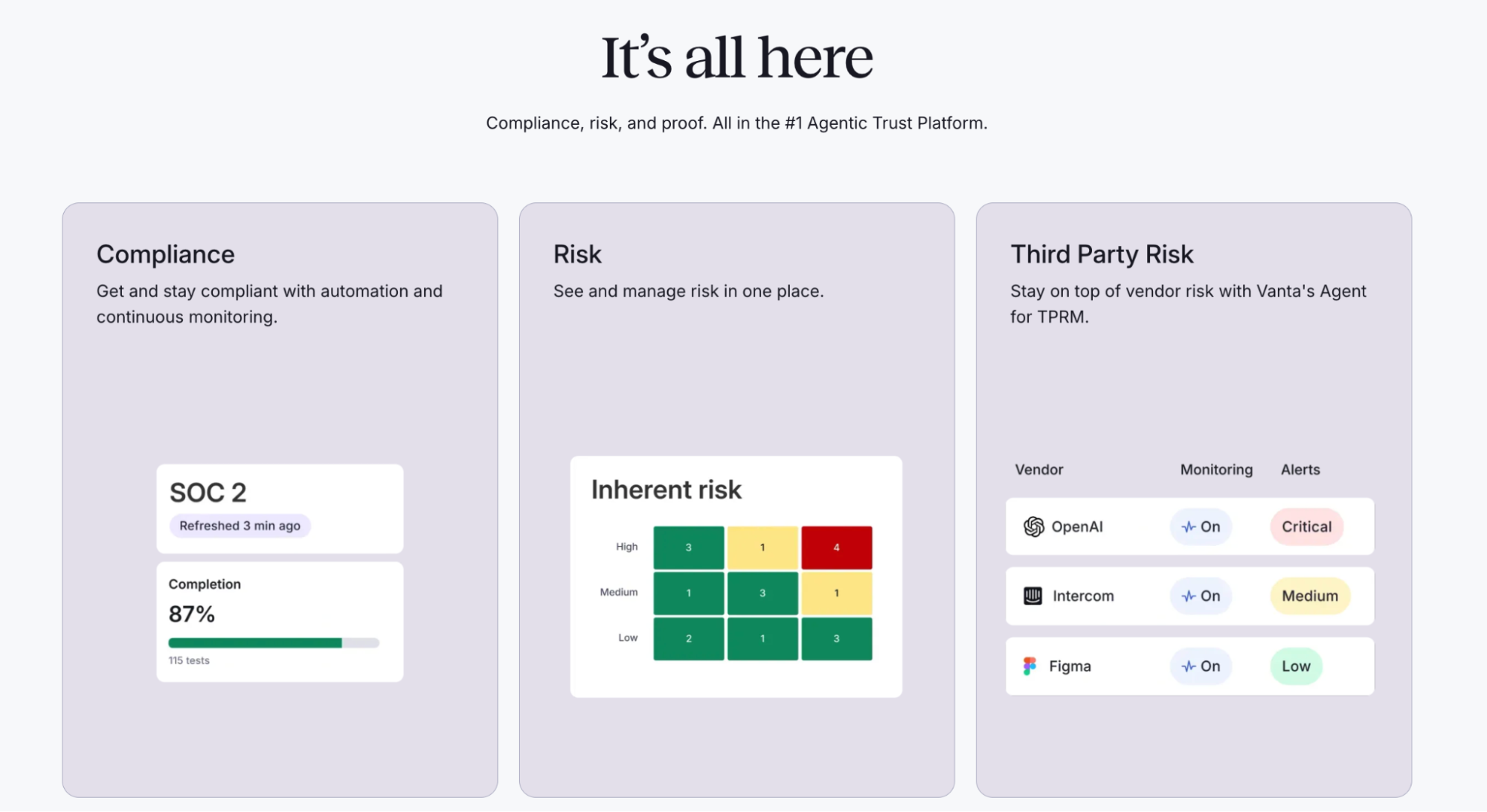
Just take a look at one of the sections on their homepage below. It gives you a clear idea of what you get without any mumbo jumbo or marketing-heavy copy, which is pretty common in this industry.
Source: Vanta
Yes, they also have a llama mascot and post some funny videos. But what really helps them differentiate is simplicity. Because most of their competitors choose a different, more traditional brand communication style.
5. Test your options in one channel first
It’s easier (and safer) to test your brand voice ideas in one channel or even one specific format. This way, you’ll get real-life feedback before you rebrand everything.
There’s no single golden standard for how to do that. But overall, you can simply come up with a couple of new creatives in your updated ToV and test them on one channel first.
It might be smart not to choose your main platform. Instead, go for something where the audience is more chill. It can be TikTok or Instagram.
Great brand voice examples and what they teach us
These won’t be examples that tell you: “Use this vocabulary,” “Try this format,” or “This is a great joke you could test.”
Because those are quick fixes that won’t help you find a ToV that represents your brand.
Instead, we’ll take a look at the brands’ identities and how they communicate them. As a result, you can also find some broader, structural directions your brand can take with its ToV.
Sentry: Focusing on the end user, not just decision-makers
If you’ve ever worked with developers, you know how much they hate marketing. And while most dev companies understand that, they still focus on decision-makers.
But Sentry took a different approach.
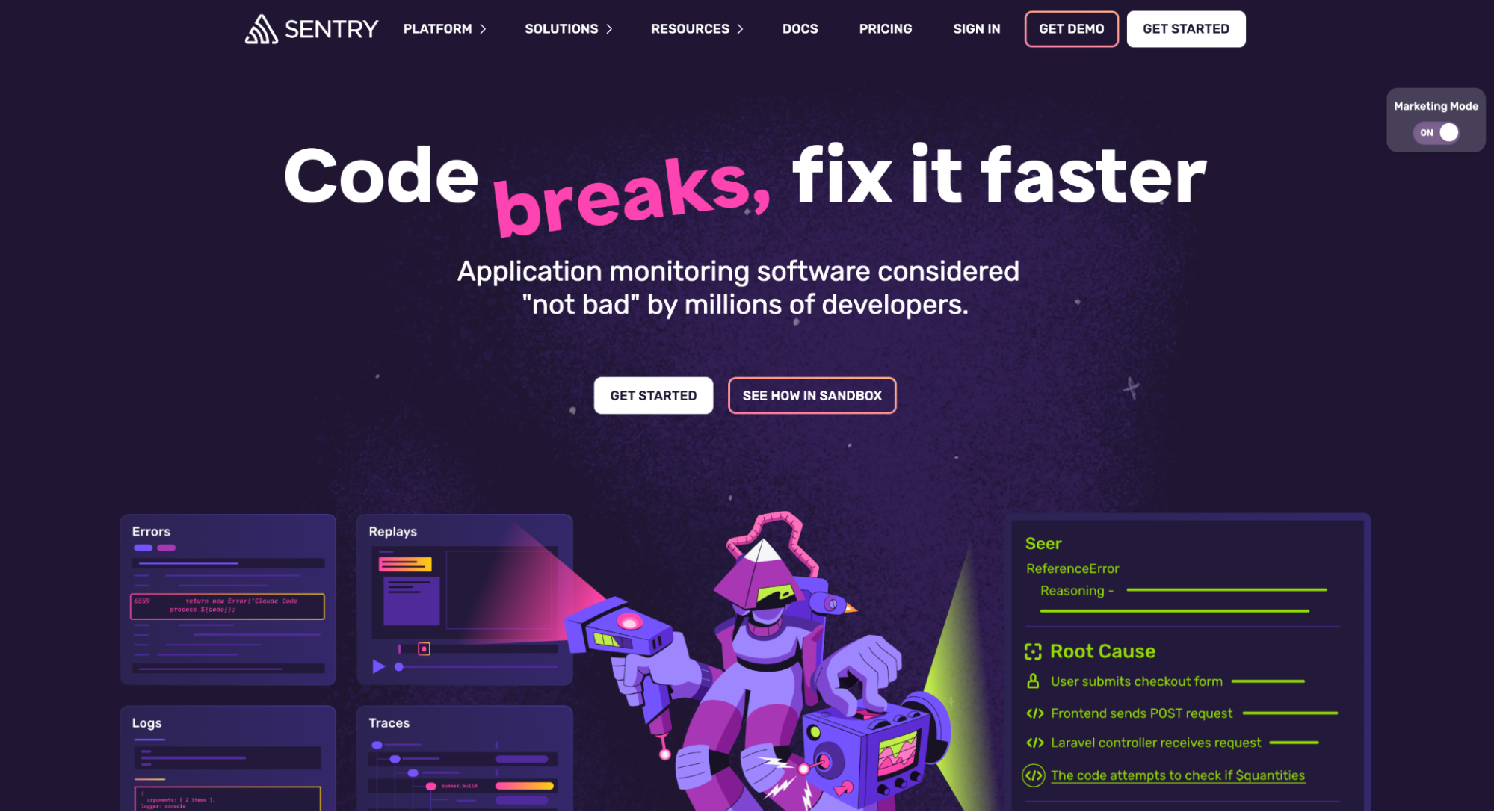
Source: Sentry
They went further than just the style and website copy.
They even added a Marketing Mode switch that takes you to a different version of the homepage. Pretty good, huh?
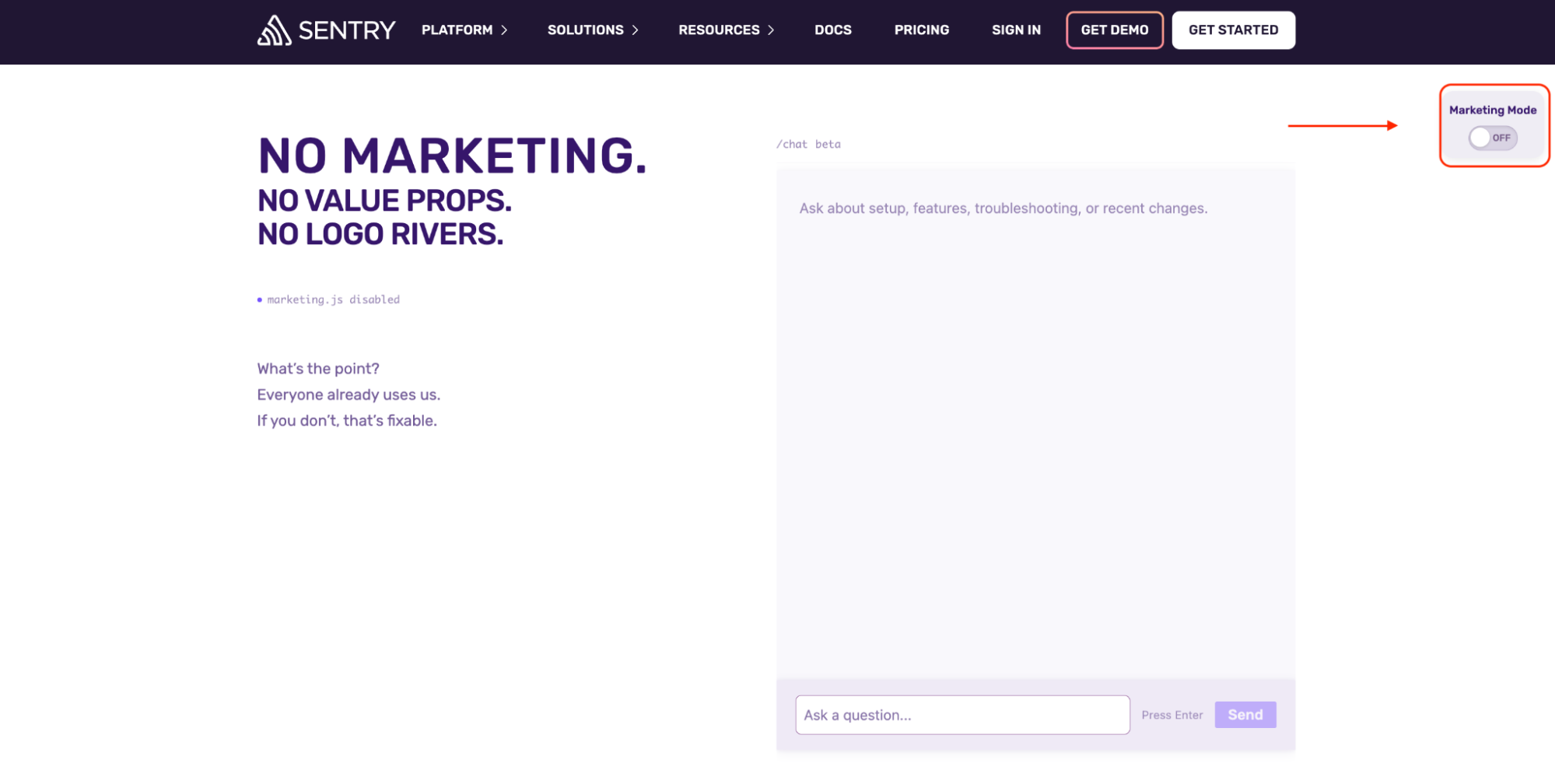
What it teaches us:
If you know that end-users are rarely making decisions in your niche, it’s still important to remember who you create your product for.
While many companies choose one channel to communicate with their users (Reddit, Discord, etc.), you can make it a part of your brand voice. And even your positioning.
Figma: Your community can help you shape your brand voice
Figma’s entire identity is shaped by its community.
For example, on its blog, Figma often lets companies show how they use the product. Here, a Lead Product Designer at Dropbox shares how she uses Figma Weave with other community members:
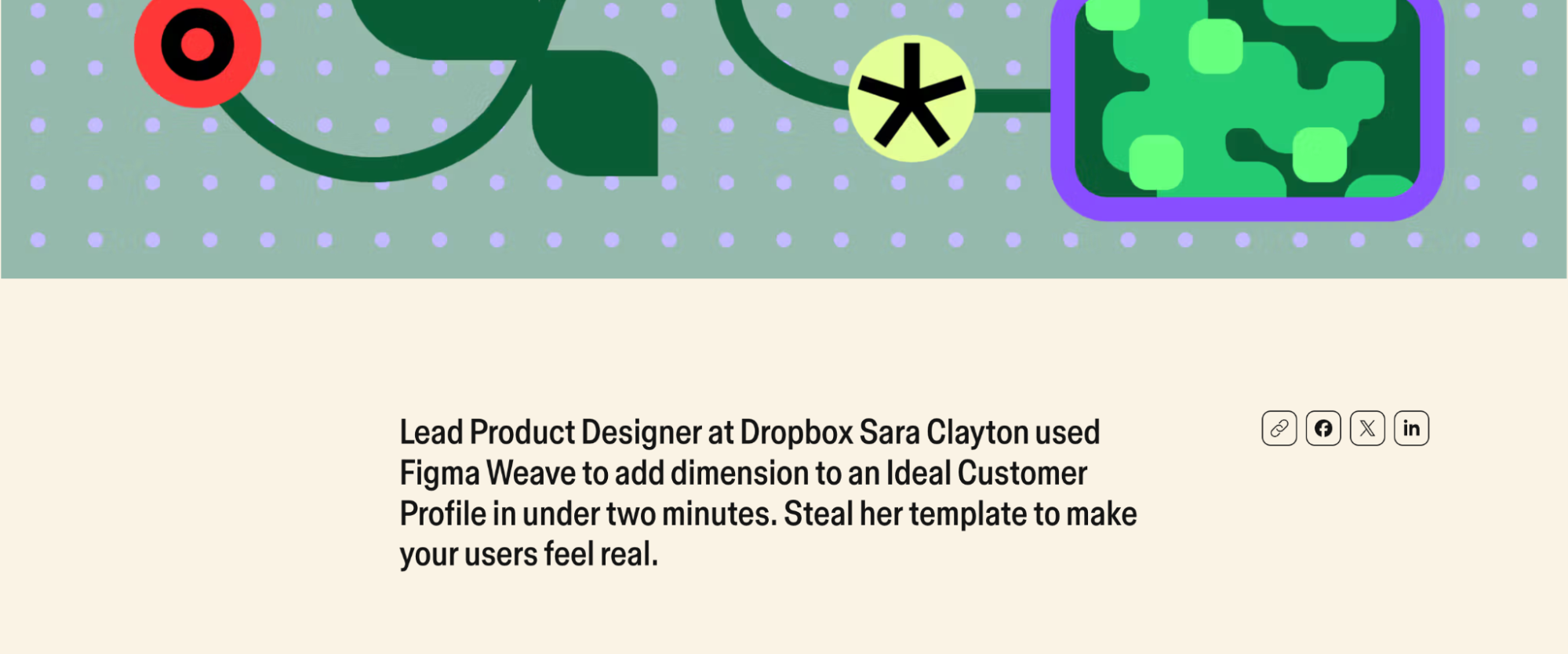
Source: Figma
But it doesn’t stop there. The Friends of Figma project is a global community and networking program where creative people can connect and share:
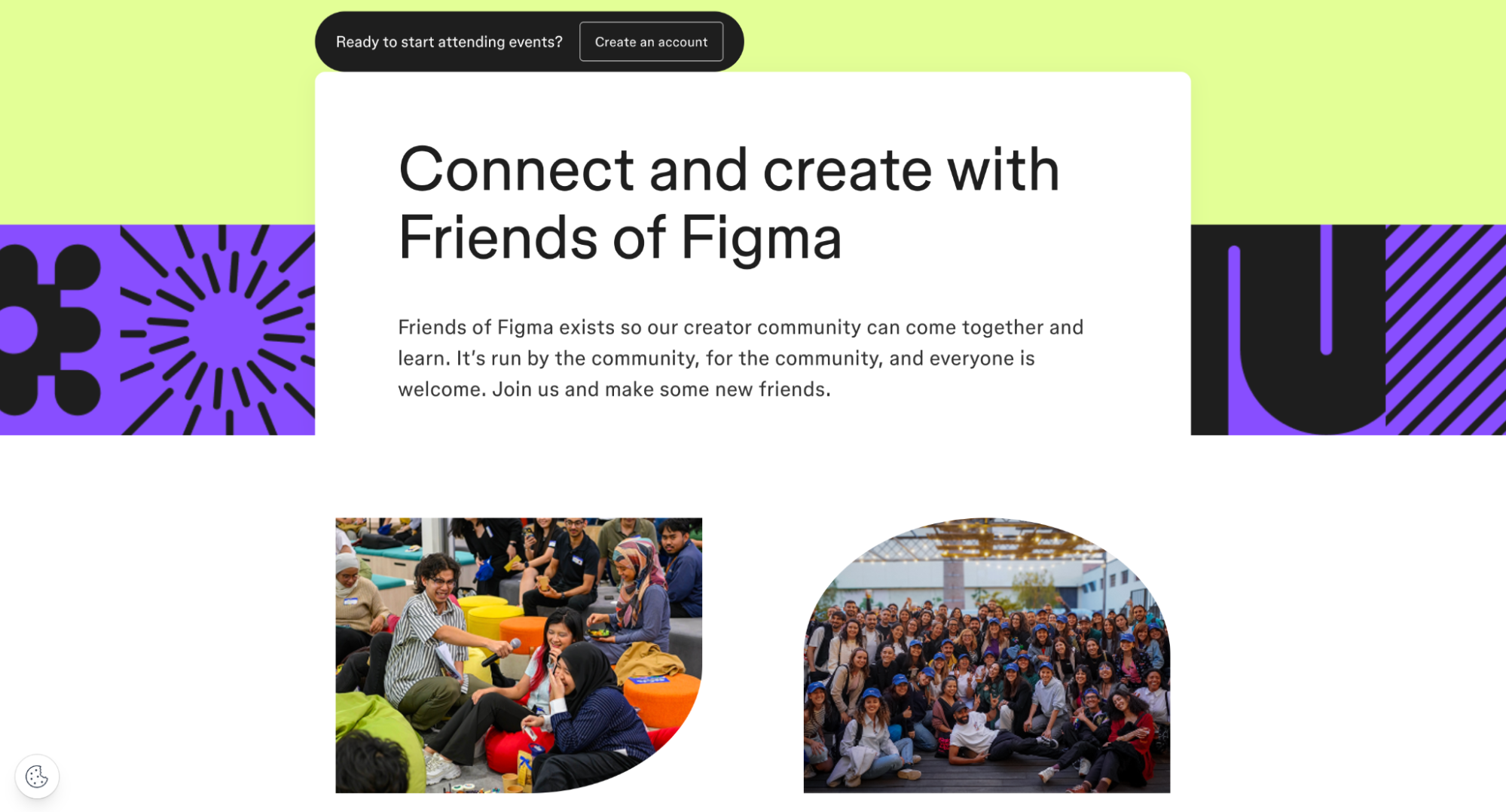
Source: Friends of Figma
And its socials are all about sharing new features and ideas with Figma users.
What it teaches us:
If community plays an important role in your product, think of the ways it can shape your ToV. Letting your audience speak and shape not only your offering but also your voice is a very “warm” and different approach.
Practically, you can:
- Encourage your community to participate in your social media content (including UGC and content you film).
- Get them to share their workflows on your blog, in webinars, LinkedIn posts, or other types of collabs.
- Create an actual community where people can share their ideas, make new connections, etc.
Girl in Blue Studios: Your team’s POV makes you different
One of the ways to create a relatable brand is to lead with your team’s vision and faces.
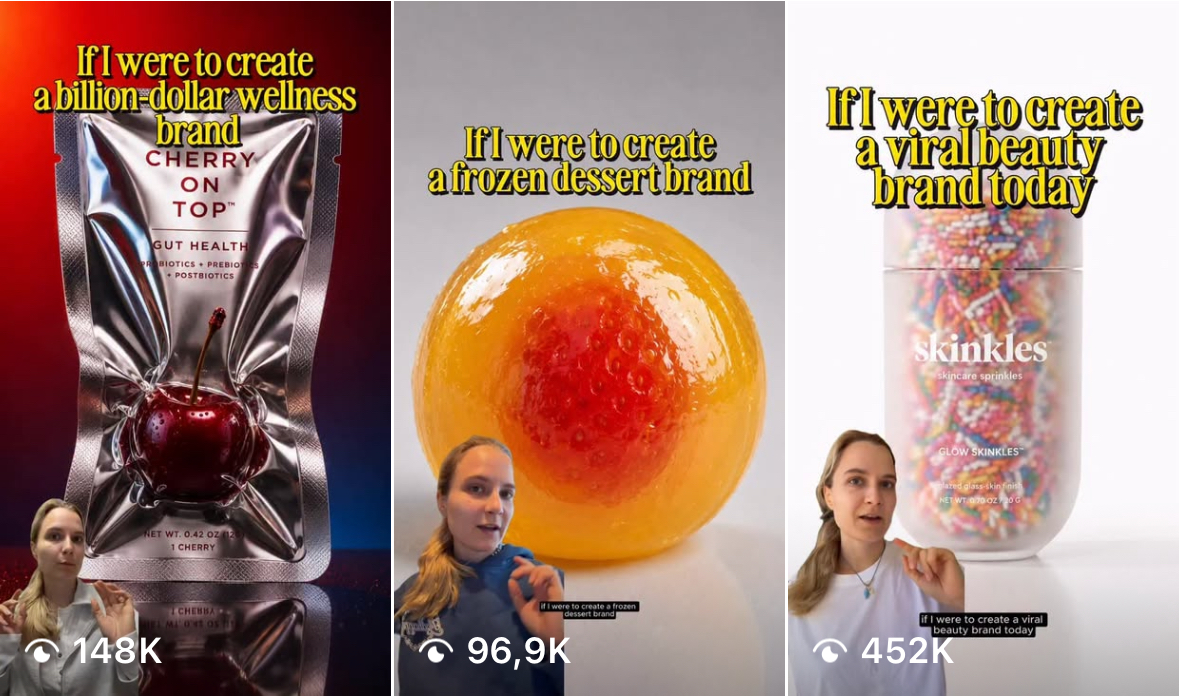
A great example of this is Girl in Blue Studios and its viral format, “If I were to create an X brand, this is how I’d do it.”
The founder of the studio takes hypothetical scenarios and uses them to show her expertise.
Source: Instagram
And even though they’re a creative agency, any business can differentiate itself by sharing its team’s POV.
What it teaches us:
It’s an interesting format to try.
But beyond that, it can shape your brand identity. It’s already quite popular with founder-led SaaS companies. Yet, you can take it to the next level where your team defines your tone of voice (remember that step #1?).
Often, customers don’t even know who’s behind the product. You’d typically only see a couple of employee pictures in the About us section. But your team can shape your company image and communication style.
So, if you don’t want your business to feel faceless or overly corporate, you can make it about the people on your team and their unique POVs.
For example:
- Your newsletters could turn into insights from your team members.
- Your Instagram posts could include opinions on important topics from different departments.
- Your LinkedIn could feature a short video where a writer tells about the new research they’ve conducted, instead of simply posting, “Here is a new blog post we’ve published.”
Of course, it won’t work for every company. But if it fits your identity, it could be worth trying.
Revolut: Serious businesses can feel approachable
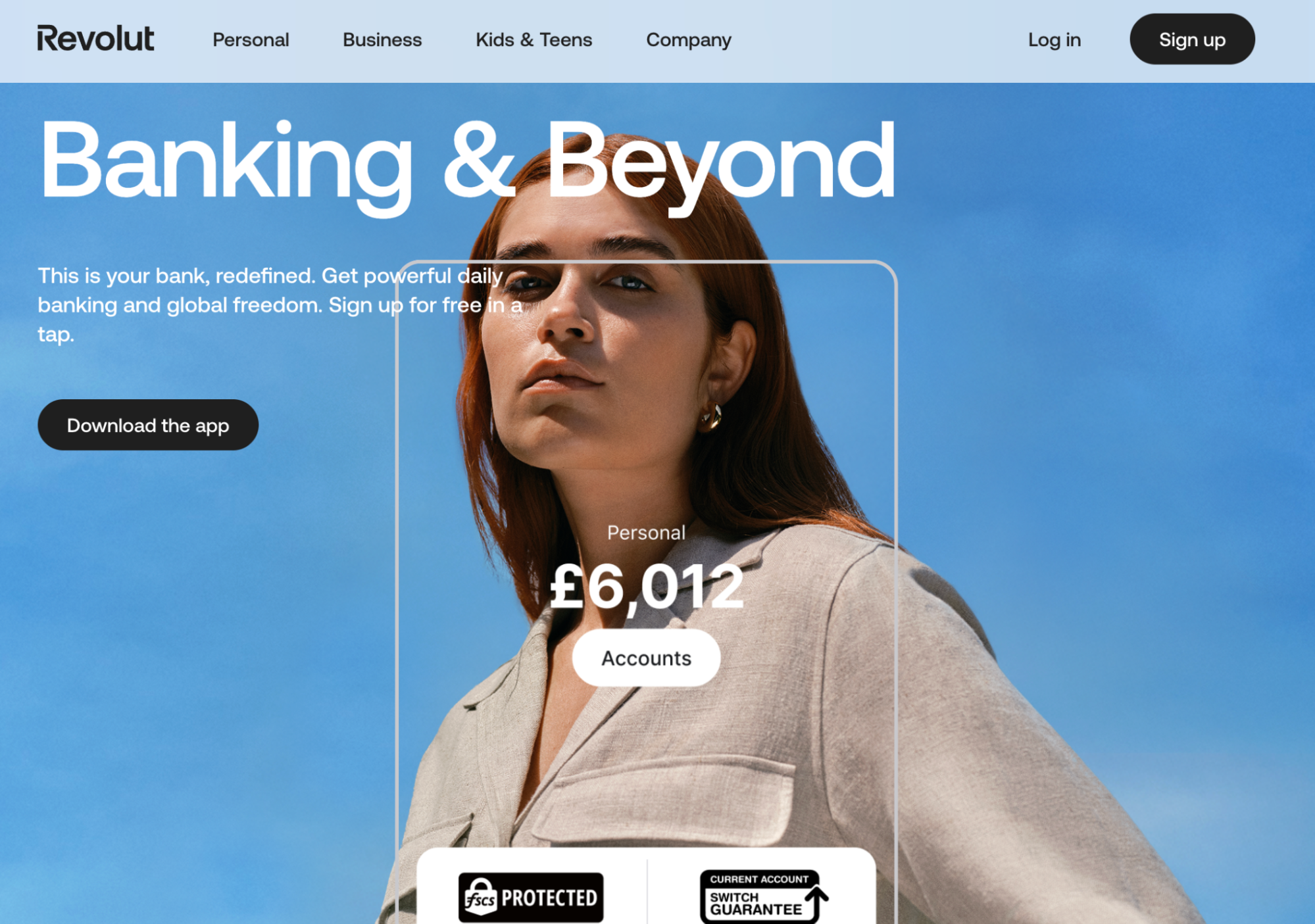
Revolut is a great example of how a serious business that needs customer trust can stand out without being quirky.
They feel modern and approachable, even though they’re a banking app.
From the start, they wanted to stay away from the traditional banking image. And they communicate that well without losing credibility.
Source: Revolut
What it teaches us:
Your brand voice has to communicate your values first.
That’s exactly why, in the previous section, we mentioned how important it is to list your customers’ expectations and non-negotiables. They will help you find the balance between “feeling fresh” and “being out of line.”
dslx: Your mission is more than a beautiful slide in a deck
Of course, we had to mention it (sorry, not sorry).
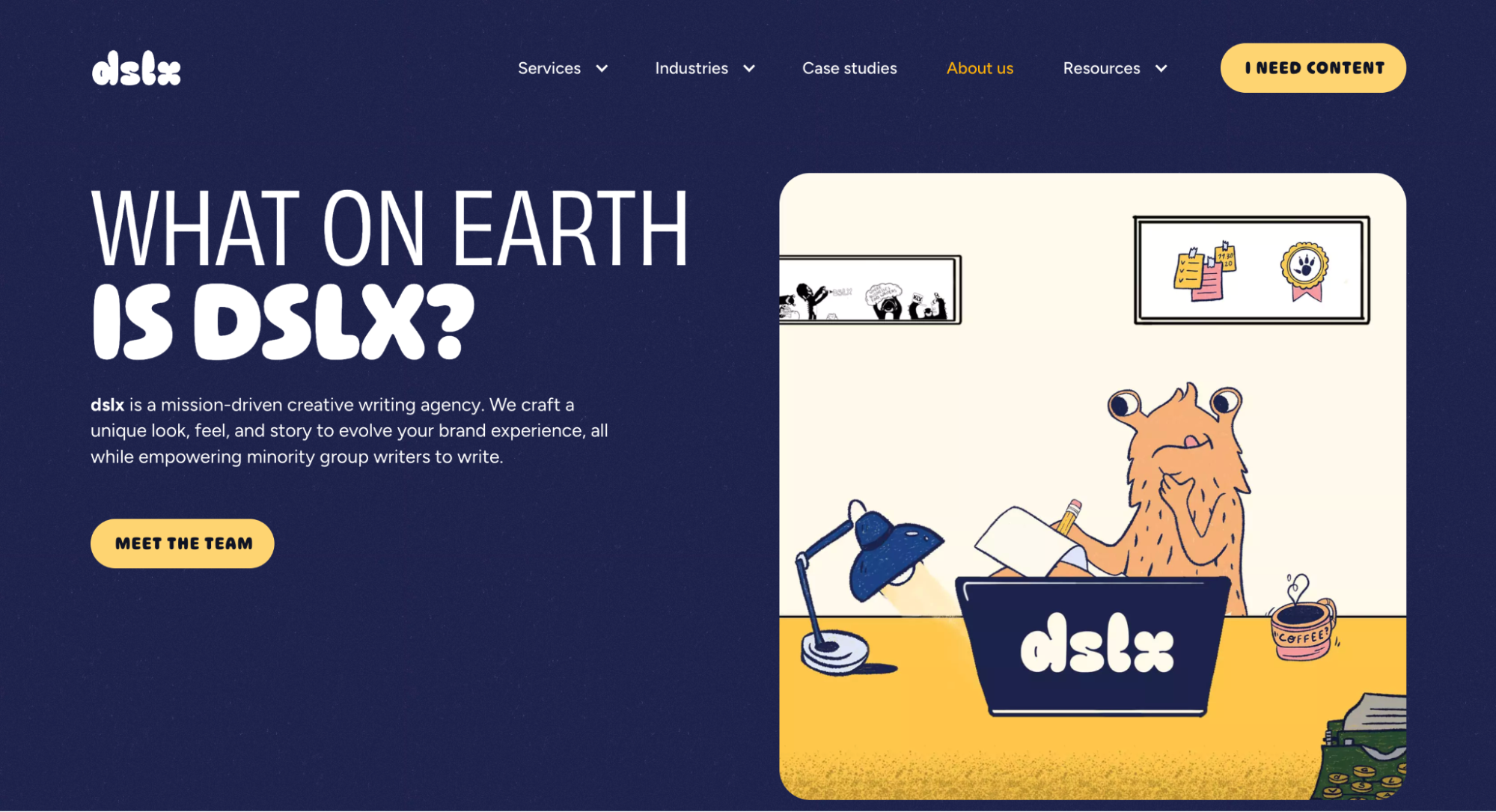
dslx could be just another “agency that writes SEO-friendly blog posts.” But instead, it’s a place that greets you with monsters and a strong mission: to empower underprivileged writers to write.
It makes you stop and take a look at the business, instead of just scrolling past.
What it teaches us:
Don’t hide who you are. Your team’s quirks could become your biggest differentiation point. Just don’t be afraid to communicate them.
The dslx team could have decided that weaving dyslexia into its brand would be too personal or irrelevant.
But instead, they turned it into the brand name and a core part of the entire business identity.
And the most important lesson here is that we often look for inspiration in compilations of brand voice examples and someone else’s stories.
Yet, in reality, our biggest inspiration might be right in front of us: in our team, our audience, and our true mission.
Brand voice is more than just a set of rules
Your brand voice strategy needs clear guidelines and some usage rules. Sure. So, you can create all those beautiful PowerPoints with dozens of slides. But that isn’t the most important part. What matters most is:
- Understanding the essence of your business.
- Figuring out the easiest way to communicate it.
- Making sure everyone on your team understands and applies it.
If all this feels a bit like mission impossible or you’re simply feeling lost, there is a really professional (and fun) content writing agency. So, if you ever need help, you now know what to do.